
Gua Sha for your face: a guide
Learn about this unique self-massage technique
by Megan
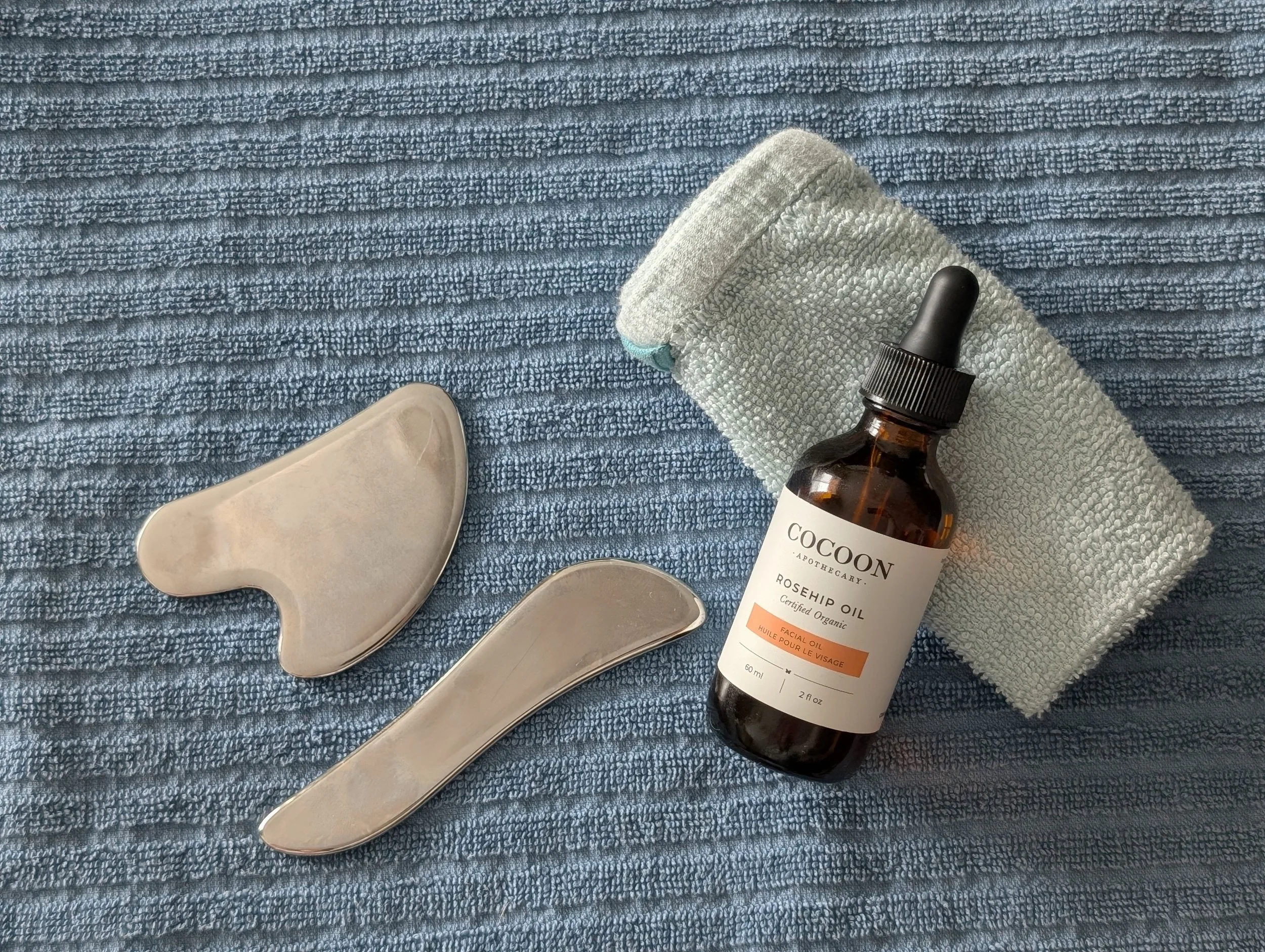
As a massage therapist, I love using a gua sha for myself and clients for skin and muscle health on the face. A gentle gua sha practice promotes healthy circulation and elasticity in the skin of the face and neck.
Let’s explore gua sha for self-use.
If you are unsure if gua sha is for you, please discuss it with a healthcare provider trained in this modality.
What is gua sha?
Gua sha is a traditional East Asian practice. It is a natural, non-invasive self-massage tool and technique. The name Gua Sha is Chinese, with gua meaning to scrape or scratch and sha meaning sand/shark skin, or red.
Traditionally, gua sha is the scraping of skin with steady pressure and a repetition of strokes until sha blemishes appear. The sha, or redness marks are known in the west as petechiae: a light red and purple skin effect from the damage to small blood capillaries.
When doing gua sha on the face, we use light pressure to avoid a deep bruising effect while still benefiting circulation and the surface layers of skin.
Historically, gua sha has had many traditional health applications to manage acute and chronic pain, musculoskeletal conditions and some respiratory conditions. Recent studies have found face gua sha effective at reducing fine lines and wrinkles and improving overall skin health.
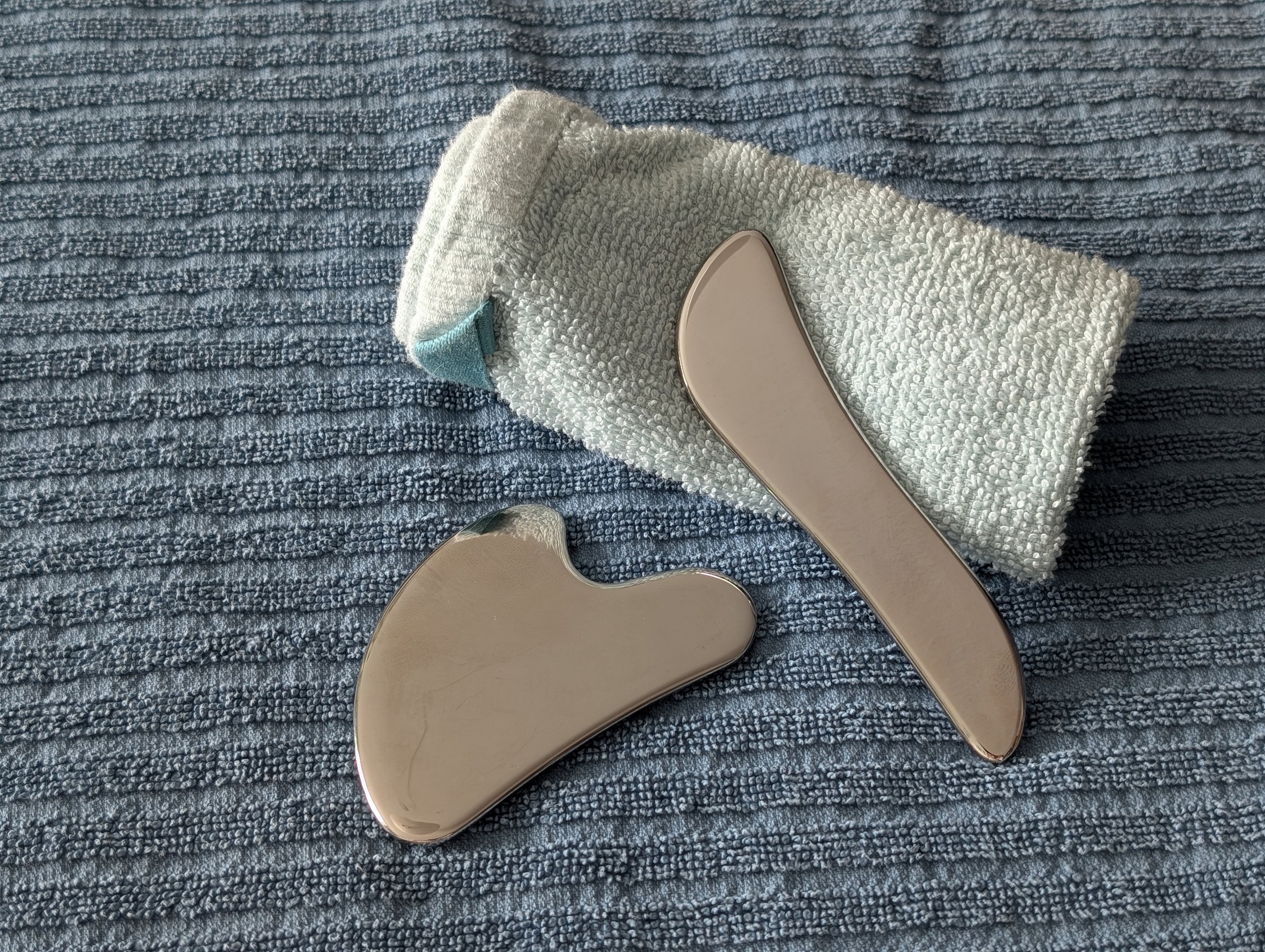
Heart-shaped and S-shaped gua sha
Is Gua sha for me?
Gua sha is generally an appropriate tool to use on adults, children, and seniors. You should not use gua sha if you have open or broken skin, frail skin, recent botox or cosmetic procedures, or are pregnant.
Benefits of gua sha
Improves circulation of oxygen-rich blood
Decreases fine lines and wrinkles
Reduces tissue tone - in muscles and fascia
Breaks down adhesions and scar tissue in fascia
A comparative study between the use of jade rollers and gua sha for face treatment indicated that gua sha has the most effective for reducing muscle and fascial tension, with some benefit to supporting skin circulation and elasticity. If you are someone who holds muscle tension in the face and neck or have scar tissue, you will benefit from gua sha treatment. For more skin health benefits, you could add face cupping or rolling to your care routine.
Risks of gua sha
Some folks who try face cupping experience the following:
Light headache
Bruising
Redness/swelling
Skin infection
But these outcomes are rare and are usually due to improper hygiene and application. Symptoms like redness, swelling, and headache usually resolve within hours while infection and bruising may take weeks.
Reducing risks:
Clean your gua sha thoroughly with hot water and soap before and after use.
Make sure to wash your hands and face before you begin.
When using gua sha, limit the depth of pressure to reduce chances of a bad reaction or skin bruising.
To avoid infections or exacerbating skin issues, don’t use your gua sha when you have broken or fragile skin or when sick with a fever.
Gua Sha best practices
Gua sha technique
Wash face and hands
Apply a light lotion or face serum/oil
Use one hand to anchor skin
With the other hand, hold the tool at a 45 degree angle from the skin pulling with pressure in one direction. Pressure should be enough to grip the skin but not so deep to cause discomfort or bruising.
Use a slow and repetitive application, with consistent pressure, repeating each pass of the face three to five times.
10 minute Gua sha massage sequence
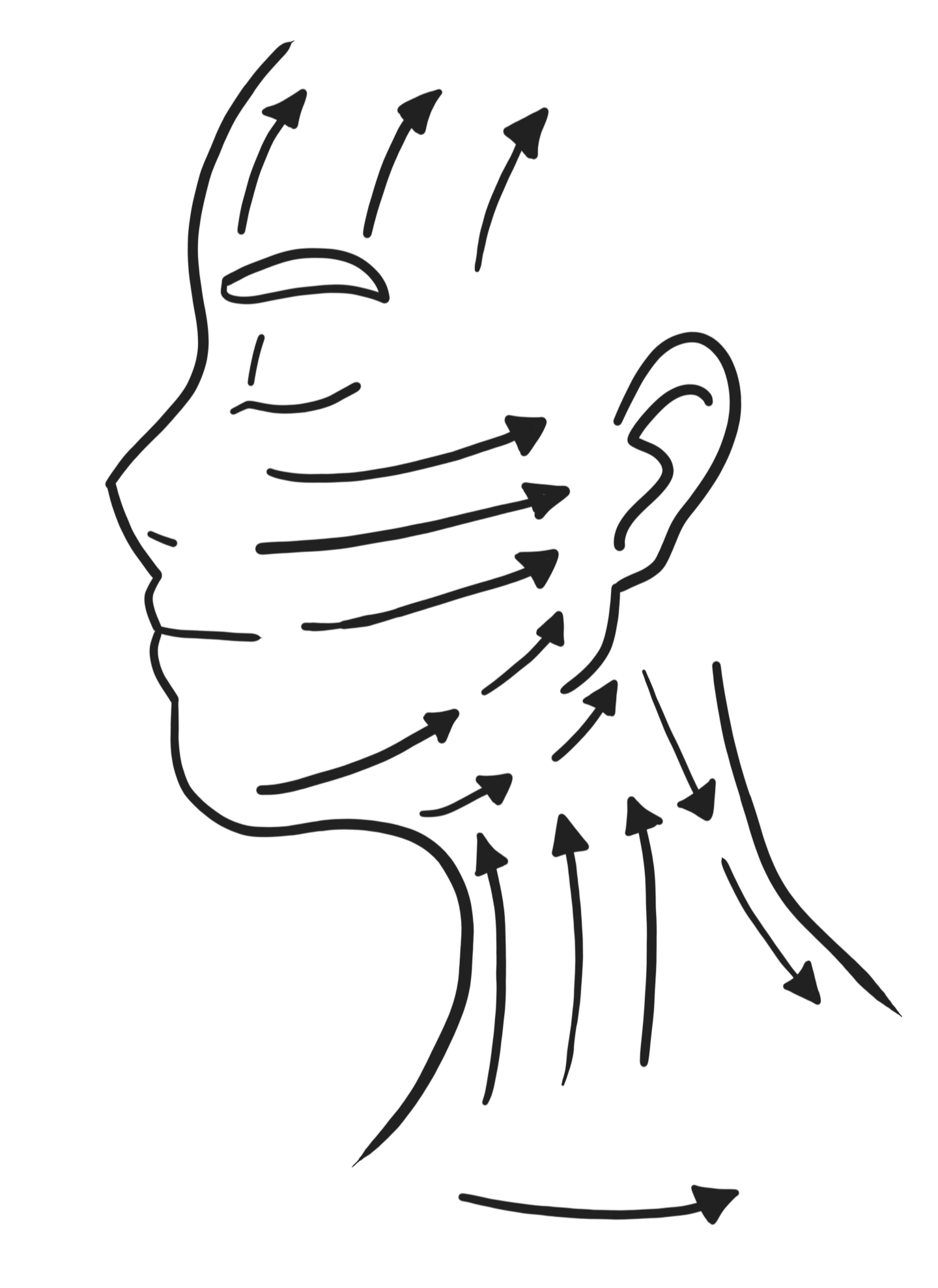
Gua sha stroke direction
Begin with the strokes on from the center of the chest out to the shoulder
Then work up the neck moving from the trunk towards the head, from the center to the sides of the neck
Treat the under the jaw and working from the center of the face to the ears
Move from the center of the chin to infront of the ears, pulling over and behind the ears and down the back side of the neck
Beginning at the nose, contour the face along the cheeks towards the ears and temples working up the face until under the eyes
Beginning in the center of the forehead, work outwards along eyebrow line with each stroke pulling up into the scalp.
Follow along with your gua sha
Don’t have your own Gua sha? Head to the prop shop to pick up yours today for free pick up in Waterloo Region.
How often should I use my gua sha?
Use time depends on your goals!
45 -60 minute treatments allow for extended time in each area and can be done weekly or bi-weekly
10 minute treatments can be done 4- 5 times during the week and still demonstrate measurable changes (Cite:. https://doi.org/10.1111/jocd.70236).
Other self-care resources
Read the Face Cupping 101 blog
Read the Simple Self-Care: Jaw blog post
Read the Simple Self-Care: Headache blog post
Further Reading
Arya Nielsen PhD (cand), LAc, Nicola T.M. Knoblauch MD, Gustav J. Dobos MD, Andreas Michalsen MD, Ted J. Kaptchuk. The Effect of Gua Sha Treatment on the Microcirculation of Surface Tissue: A Pilot Study in Healthy Subjects https://doi.org/10.1016/j.explore.2007.06.001
Domingues, Andrea Leite Barretto, et al. The Use of Gua Sha to Improve Facial Expression Lines and Wrinkles: A Case Study.
Sun-hee Ahn, Ui-jae Hwang, Hyo sun Han, Jun-hee Kim, Hyun-joo Lee, Yu-rin Jeon, Hyun Hwa Lee, A-hyun Hwang. Comparative Effects of Facial Roller and Gua Sha Massage on Facial Contour, Muscle Tone, and Skin Elasticity: Randomized Controlled Trial. https://doi.org/10.1111/jocd.70236
